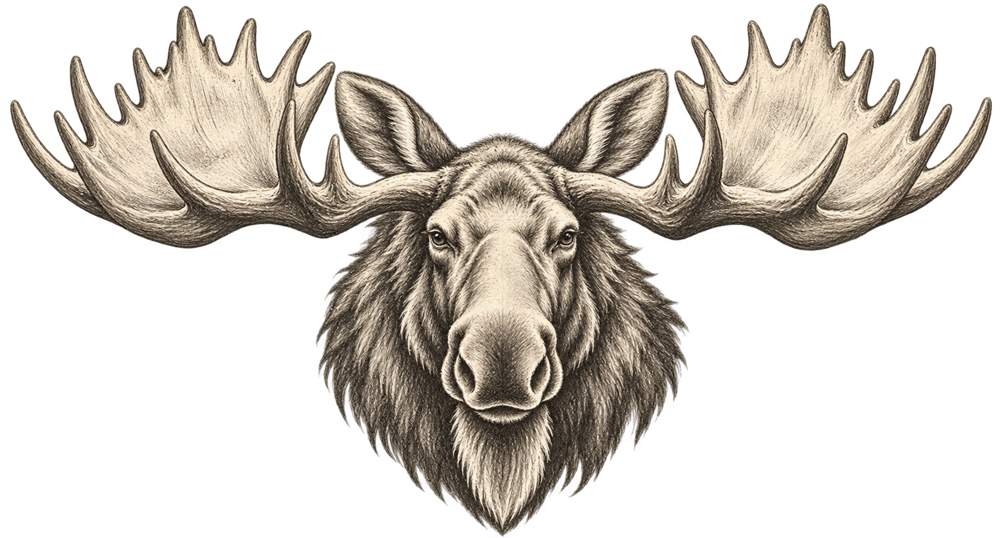
A shoreline where you watched a moose in July is worth marking on a map. It is also worth revisiting before an autumn hunt. The animal’s food changes, and the useful question is what it is feeding on now.
Start with the plant, then the sign
Moose browse leaves and woody shoots. Willow, birch and aspen are useful plants to learn before you start naming feeding areas. Aquatic plants can also be important where they are available. Ontario’s moose habitat guideline describes a seasonal shift from aquatic and leafy food toward woody winter browse.
The Ontario guide was published in 1988. Its plant and habitat descriptions are useful background, but they are not a current record of activity at a particular camp. Put that background beside observations from your own trip.
Choose a few patches you can inspect without crossing a hunting-unit boundary or entering land where you lack permission. Write down what grows there. If you are unsure of a plant, photograph its leaves, stem and setting for later identification rather than giving it a confident name in your notes.
A summer sighting is a starting point
On a summer visit, record the animal’s location and what it was doing. A moose standing in shallow water is a sighting. A moose repeatedly taking plants from the water is a feeding observation. Those notes answer different questions.
A National Park Service summer diet study in Alaska found willow to be important in its study area, where aquatic plants and leafy ground plants were limited. That result is a useful reminder to inspect the food at the actual site. It is not a percentage to apply to an Ontario lake.
Before the hunt, return to the marked patch if access permits. Look for recent tracks, feeding sign and trails leading toward woodland. Keep the date of the July sighting beside the date of the new visit so the two do not become one vague memory.
Compare two patches fairly
Suppose you check a shoreline shrub patch and a young forest opening on the same morning. This is a notebook example, not a report from a client camp. Spend enough time in both places to record the plants, visible sign and footing. A muddy shoreline may hold obvious tracks while dry ground nearby records very little.
Do not rank the patches only by the number of prints. Record what made tracks easy or difficult to see. A comparison is more useful when it keeps the limits of the observation.
| Patch | What to write down | Next question |
|---|---|---|
| Shoreline shrubs | Plant names, track direction, water level and date. | Is use repeated on the next visit? |
| Young forest opening | Browse, nearby shelter, footing and date. | Where do the used trails lead? |
| Woodland edge | Beds or tracks, nearby feeding growth and access. | Can you return quietly and safely? |
Autumn and winter need another look
As leaves change and fall, look again at the plants that show use. Ontario’s older guideline describes woody twigs and branches as winter food, with conifer cover providing shelter. Snow and crust can limit movement and access to feeding ground.
For an autumn hunt, do not jump straight from that winter description to a fixed setup. Record the conditions you have: leaf cover, reachable shoots, recent weather and visible sign. Ask the operator which routes are open and which areas have been used recently.
Keep the route back in the same plan. A patch reached easily on a daylight walk may be a poor choice when rain changes footing or the return crosses water. Food notes and access notes should travel together.
What to ask a camp operator
Ask which feeding areas have shown recent use, when that use was seen, and whether it was a sighting or sign. Then ask how to reach the area, which WMU it is in, and whether the route needs a boat, ATV or a walk.
Green Wilderness Lodge’s moose page identifies WMU 29 and describes hunting access by boat or ATV, along with local advice and optional guiding. Ask the lodge how those options fit your group, tag and dates. A named unit and a clear route are more useful booking details than a promise of a large animal.
Read Food & Feeding for the seasonal biology, then use Calling, Scouting & Tracks to turn your visits into a repeatable record.
Sources & further reading
- Ontario moose habitat guideline (1988) ↗
- National Park Service: moose summer diet study ↗
- Green Wilderness Lodge: hunting access and services ↗
Read the official Ontario rules for your hunting unit and tag before travelling.