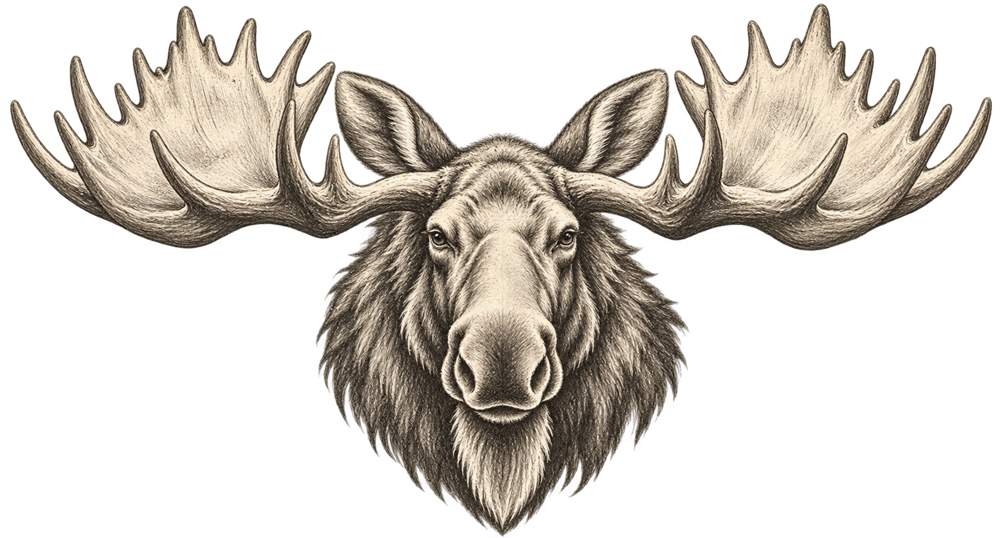
A bull grows a new set of antlers each year. Spring and summer growth, the loss of velvet, and later shedding are parts of one annual cycle. A winter bull can have no antlers at all.
Antlers are bone
Antlers grow from permanent bases on the skull called pedicles. While growing, they are covered by velvet, a skin supplied with blood vessels and nerves. Once growth ends, the velvet is lost and hard antler is exposed.
Antlers differ from horns. A horn has a permanent bony core and outer covering; a moose’s antler is shed and replaced. The Alaska wildlife department’s antler accounts describe that difference and the living tissue that supports growth.
Growth, hard antler and shedding
| Stage | What changes |
|---|---|
| Spring and summer | New antler grows beneath velvet. |
| Late summer and early autumn | Growth ends and velvet is lost before the main breeding period. |
| Breeding season | Bulls use hard antlers in contests. |
| Later in autumn and winter | Bulls shed; timing varies between animals. |
There is no single shedding date to use for field identification. Ontario warns that some bulls have lost their antlers before the end of October. A bull still requires the correct bull tag after shedding.
A rack does not give an exact age
Antler growth is affected by age, nutrition, health and inherited traits. An injury during growth may affect the finished antler. Small spikes and uneven racks occur, so a broad palm is not the only bull shape to expect.
A point count is a description of a rack. Treating it as the animal’s exact age goes further than the visible evidence supports. Ontario’s identification page also warns that small antlers may be hard to see.
When brush hides the head
Wait for a useful view. Branches can hide antlers or resemble them, and a head turned away may conceal the pedicle area. Use the animal’s other visible features alongside the head.
If a photograph is your goal, keep your distance and let the animal move. A better view is not a reason to approach a bull during the rut.
Study cow and calf features as well as antlers. A field decision needs more than the outline you first notice.
Sources & further reading
- Ontario: antlers and bull identification ↗
- Alaska Sounds Wild: antlers and horns ↗
- Alaska Sounds Wild: moose antler growth ↗
- Alaska wildlife department: antler growth and velvet ↗
Sources checked October 14, 2026. Survey years and historical publication dates are stated where used.