A moose’s year is tied to food, shelter, breeding and winter survival. Learning the animal gives you better questions to ask about a hunting area, whether you are visiting for the first time or returning to a familiar camp.
The largest member of the deer family
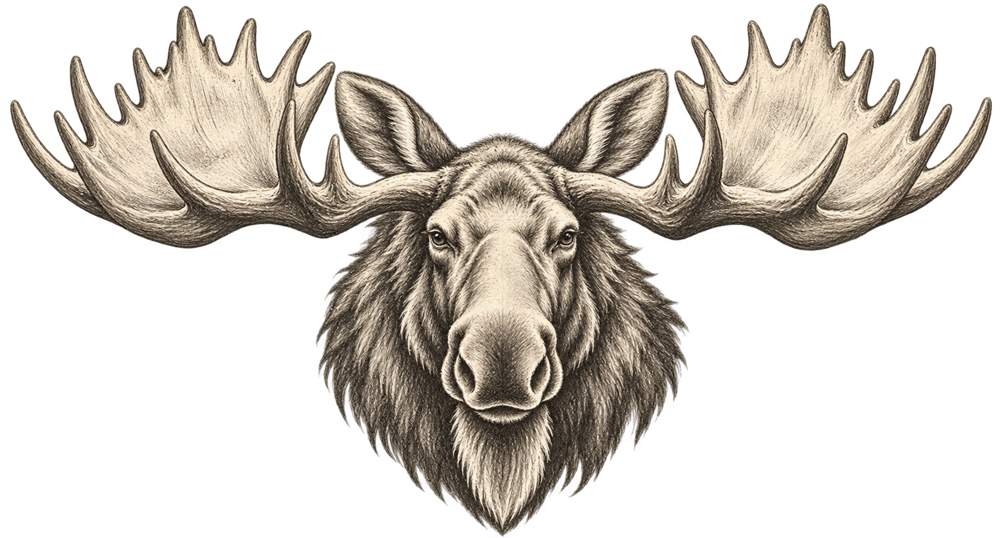
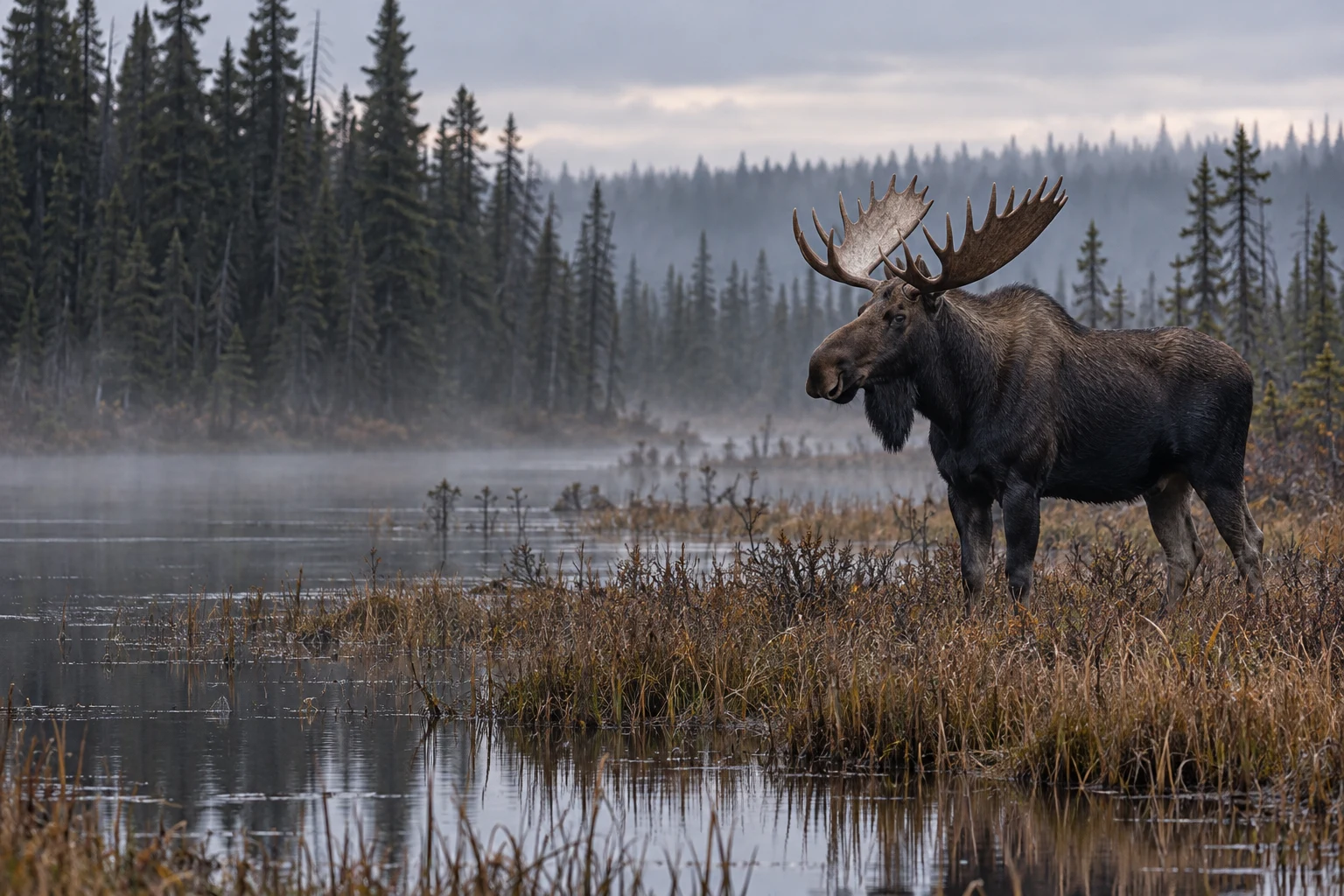
Moose have long legs, a heavy shoulder, a long muzzle and a flap of skin under the throat called a bell or dewlap. Bulls carry antlers through part of the year. Cows usually have none.
Hinterland Who’s Who describes large bulls in much of Canada reaching about 600 kg. Size varies with age, sex and location. The largest Alaska and Yukon figures are poor yardsticks for every Ontario animal.
Moose are strong swimmers, and their long legs help them move through wet ground and snow. Neither ability removes the need for suitable feeding and resting places.
One year, several different needs
| Part of the year | Read next |
|---|---|
| Spring and early summer | Calving and the cow–calf year. |
| Summer feeding | Leaves, aquatic plants and seasonal food. |
| Late summer and autumn | Antler growth and the rut. |
| Winter | Browse, forest cover and snow. |
| Across several years | Population surveys, predators and disease. |
Identify the animal in front of you
Ontario defines an adult moose for hunting as one at least a year old, and a calf as one less than a year old. A large calf and a small cow can be difficult to separate in poor light or brush.
Use several visible features. A calf tends to have a shorter face and more leg in relation to its body. A cow has a longer muzzle and heavier body. Ontario’s identification guide has photographs and comparisons worth studying before the trip.
Absence of visible antlers does not settle sex. A bull may have shed them, or vegetation may hide them. See Antlers for that field problem.
Sources & further reading
Sources checked October 14, 2026. Survey years and historical publication dates are stated where used.