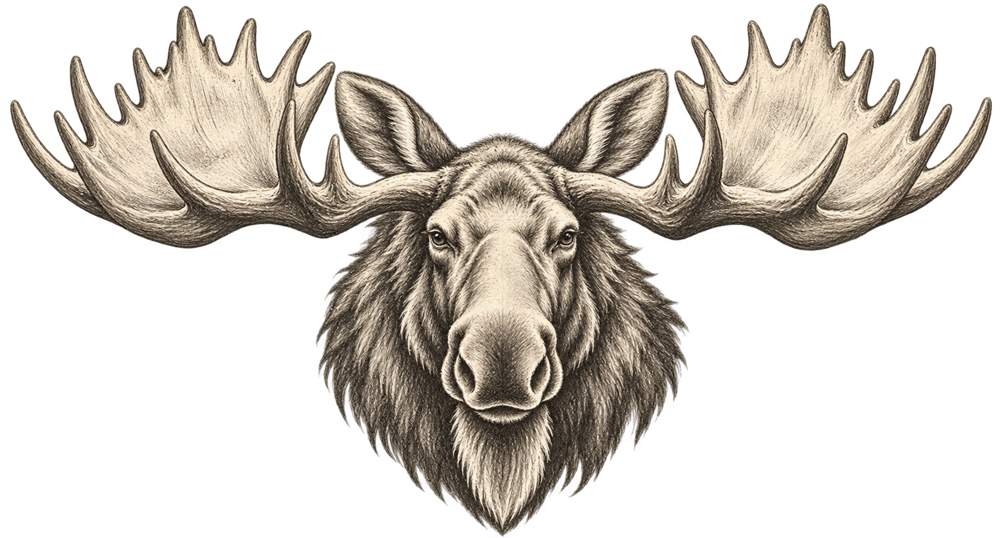
A track is a record of an animal passing a spot. To make it useful for a hunt, put it beside the trail, nearby feeding sign, weather and the date. One clear print is a reason to look more closely.
Record before you guess
Start with a map point and a photograph. Note which way the animal travelled, how many prints you can follow and what the ground is like. Put a ruler or another known scale beside a useful print without stepping into the trail.
Write what you actually see. “Two large cloven prints crossing the wet trail” is a better record than “a big bull went through an hour ago” when you have no evidence for the sex or hour. Keep a possible identification as a question until you have more to work with.
Ontario’s moose identification guide asks hunters to use several physical features of the animal itself. It also warns that antlers can be hidden or shed. A track does not supply all those missing features, and a large print is not permission to shoot an unidentified animal.
Weather puts limits on track age
Record recent rain, snowfall, frost and wind. A print made before rain may change, but a sheltered print and an exposed print can weather differently. The depth and softness of the ground also change the mark.
Avoid giving a print an exact age from appearance alone. A return visit gives you a firmer comparison: photograph the same trail, note the weather between visits and record any new crossings. Keep the first photograph rather than replacing it with the latest one.
A useful note might read: “No crossing visible on Tuesday’s visit; crossing present on Thursday; rain Wednesday night.” That gives a time window tied to your visits. It still does not name the hour the animal passed.
Read feeding sign and beds together
Look around the trail for browsed plants, droppings and beds. Name the plant when you know it and note whether use appears scattered or repeated. Do not assign every clipped twig to moose when other browsing animals may use the area.
For a bed, record its location, cover and the nearby paths. Do not assume the animal is still within a short walk. A bed is useful because it adds a place and kind of use to your map, not because it reveals the current position.
| Record | Useful detail | Claim to leave out |
|---|---|---|
| Track trail | Direction, footing, rain and repeated crossings. | Exact sex or age from one print. |
| Browsed growth | Plant, height, nearby sign and repeated visits. | Every clipped stem was bitten by moose. |
| Bed | Cover, location and routes nearby. | The animal is still beside it. |
| Droppings | Location, photograph and surrounding sign. | An exact time from appearance alone. |
Follow the route only as far as the plan permits
Before following sign, check the map and the time. Know the hunting unit, the land access and the way back. Stop where the next step would enter an area you lack permission to use or leave you uncertain of your return.
Tell the group which route you will check and when you expect to be back. Keep your navigation and communication equipment ready. If the route crosses water, include the landing and boat arrangement in the plan.
For scouting, you do not need to turn every trail into a long chase. A short visit may answer the question you came with: is the crossing still used, which plants are browsed, or does the trail connect the opening with woodland?
Bring the notebook back to camp
Compare observations by place and date. A single lively trail and several quiet visits deserve different entries. Leave room for what you did not check so the next hunter knows the limits of the record.
Ask the operator whether access, forestry activity or neighbouring hunting parties affect the next outing. Keep another group’s account labelled as their report rather than your own sighting.
The Ontario aerial survey workbook illustrates the same need at a larger scale: observed animals and estimated populations are different columns. Your scouting notebook is not a population survey. Both kinds of record are stronger when the method and date stay attached.
Use Habitat & Range to decide which places to inspect, and Moose Biology to study animal identification before the hunt.
Sources & further reading
- Ontario: identify the animal using several features ↗
- Ontario WMU maps ↗
- Ontario: observed and estimated survey records ↗
Read the official Ontario rules for your hunting unit and tag before travelling.